
Overhead Track Systems: How to Compare Ceiling Compatibility, Layout Flexibility, and Long-Term Maintenance
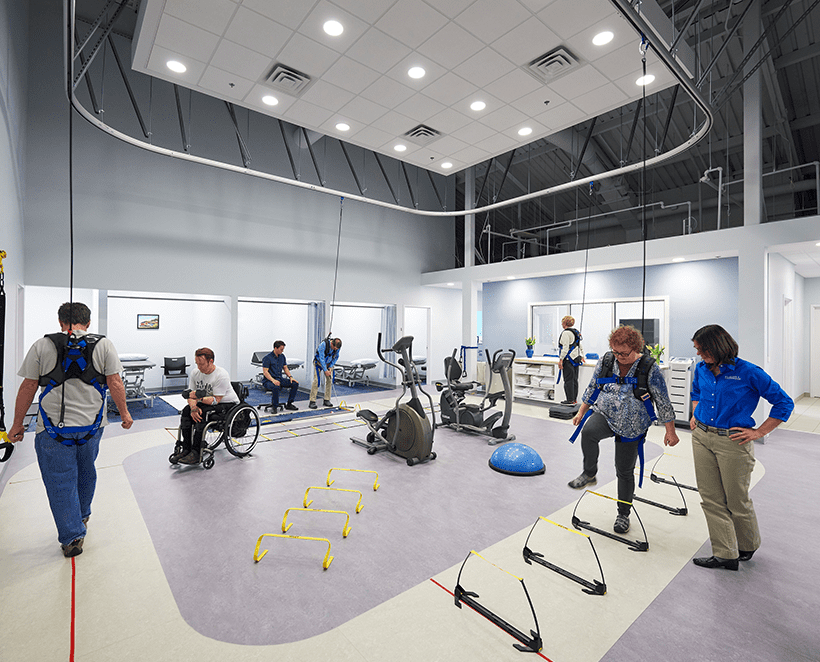
Up to 1 Million Hospitalized Patients Fall Every Year. Is Your Facility Prepared?
Between 700,000 and 1,000,000 patients are hospitalized every year because of a fall, making falls one of the most common safety events in healthcare environments. Studies show that about one-quarter of inpatient falls result in injury, creating significant clinical, financial, and operational challenges for facilities.
Preventing falls is about creating an environment where therapists can confidently challenge balance, gait, strength, and mobility without exposing patients or staff to unnecessary risks and injury.
Investing in an overhead track system will help create a safer and more effective environment for your therapy programs. However, not all systems are created equal. Some overhead track systems require extensive facility modifications or limit future expansion. Many systems demand ongoing maintenance that increases costs over time.
If you’re evaluating your options for an overhead safety system, this guide will help you compare your options based on:
- Clinic ceiling compatibility
- Layout flexibility
- Overhead track system requirements
- Long-term maintenance demands
After reading this blog, you’ll know what to look for when selecting a low-maintenance overhead system that can support your staff and patients for years to come.
Why Overhead Track Systems Have Become Essential in Rehabilitation
As rehabilitation programs become more advanced, therapists need tools that allow them to safely challenge patients while reducing fall risk and staff burden.
Overhead track and harness systems have become increasingly popular because of:
- Growing demand for higher-intensity gait and balance training
- Increased focus on patient safety metrics
- Therapist confidence during advanced mobility interventions
- Reduction of manual guarding requirements
- Ability to safely progress patients sooner
- Support for neurological, orthopedic, vestibular, and geriatric populations
- Improved patient confidence during rehabilitation
A properly designed overhead track system allows therapists to focus on treatment rather than constantly worrying about fall risk.
Ceiling Compatibility: The First Factor Every Facility Should Evaluate
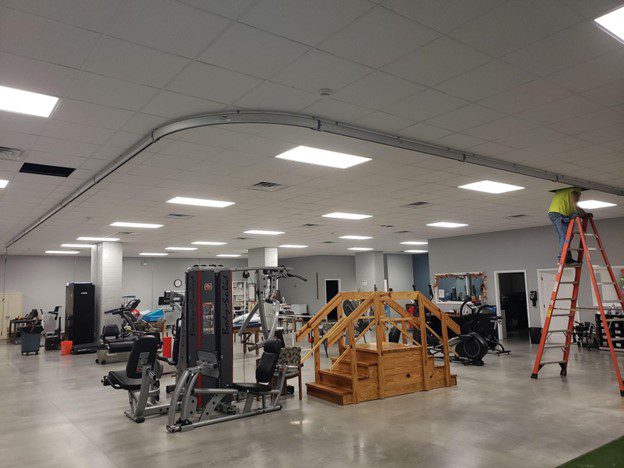
Open Ceiling Versus Finished Ceiling Environments
The type of ceiling in a rehabilitation facility significantly impacts overhead track installation. Open ceilings often provide easier access to structural supports and may simplify installation. Finished ceilings may require additional planning to access load-bearing structures without disrupting the facility’s appearance. Understanding the existing ceiling environment helps determine the feasibility of installation, project scope, and overall cost.
Structural Support Requirements
Every overhead track system must be securely attached to a building’s structural framework. Depending on the facility, this may involve steel beams, wood trusses, concrete structures, or other load-bearing elements. A professional structural assessment ensures the system is installed safely and meets all manufacturer specifications. Proper structural support is essential for long-term reliability and patient safety.
Ceiling Height Considerations
Ceiling height influences both system performance and patient comfort. Higher ceilings may require longer suspension components, while lower ceilings must provide adequate clearance for safe movement. Facilities should evaluate ceiling height early in the planning process to ensure the system can accommodate both therapists and patients without limiting treatment activities.
New Construction Versus Retrofit Installations
New construction projects offer the advantage of incorporating overhead track systems into the facility design from the beginning. This often reduces installation complexity and costs. Retrofit installations in existing facilities are also common, but they may require additional engineering and planning. Fortunately, many modern overhead systems like the Solo-Step Overhead Track System are designed to integrate into existing clinics with minimal disruption.
Suspended Ceiling Challenges
Suspended or drop ceilings are common in healthcare facilities, but they are not designed to support patient loads. In these environments, the overhead track system must be anchored to the structural elements above the ceiling. This may require specialized mounting solutions and careful coordination during installation. Solo-Step’s qualified installation team can identify the best approach while preserving the facility’s appearance.
Integration with HVAC, Lighting, and Utilities
Ceiling spaces often contain HVAC ducts, electrical systems, lighting fixtures, sprinkler lines, and communication infrastructure. During planning, installers must identify and work around these obstacles to ensure the overhead track system operates properly. Early coordination helps prevent costly modifications and installation delays.
Load-Bearing Requirements for Patient Safety
Patient safety depends on proper load-bearing support. Overhead track systems experience both static loads (patient weight) and dynamic loads created during movement and fall arrest situations. Professional engineering evaluations ensure the structure can safely support these forces. Facilities should always work with manufacturers and installers who understand healthcare safety requirements and building standards, such as Solo-Step’s team of professional installers.
Overhead Track System Layout Flexibility
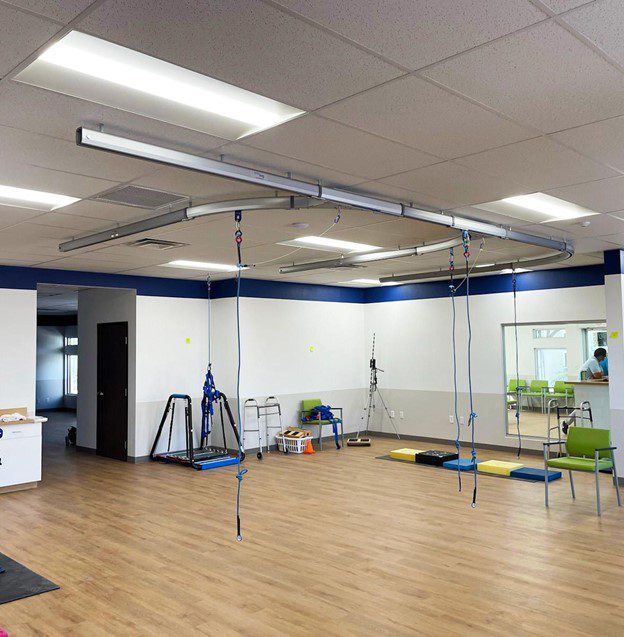
Straight Track Configurations
Straight track systems are commonly used for basic gait training and mobility exercises. They provide a simple, cost-effective solution for facilities with limited space or specific treatment pathways. While effective for many applications, they may offer less flexibility than more advanced layouts.
Curved Track Layouts
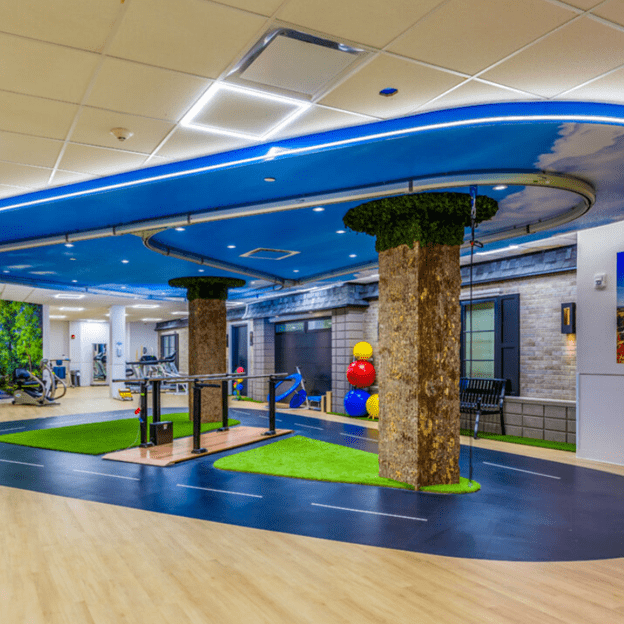
Curved tracks allow patients to practice more natural walking patterns, including turns and directional changes. These layouts create larger treatment areas and support advanced rehabilitation activities that better simulate real-world movement demands.
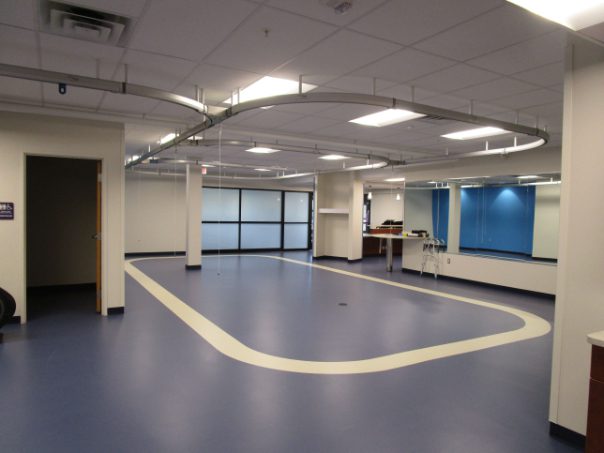
Oval-Track Layouts: Continuous Walking Paths
Continuous track designs enable uninterrupted walking without stopping or repositioning equipment. This is especially beneficial for endurance training, neurological rehabilitation, and gait retraining programs where sustained movement is important for recovery.
Expansion Capabilities
A flexible overhead track system should accommodate future growth. Facilities may want to add treatment areas, expand therapy programs, or increase patient capacity over time. Systems designed for scalability help protect the initial investment and reduce future renovation costs.
Treatment Space Optimization
Overhead track systems can maximize usable therapy space by eliminating the need for bulky floor-mounted safety equipment. This creates a cleaner treatment environment and allows facilities to make better use of available square footage.
Support for Group Therapy Environments
As rehabilitation programs evolve, many facilities incorporate group therapy sessions. Flexible overhead track layouts can support multiple patients and treatment stations, helping clinics increase efficiency while maintaining safety standards.
Why Solo-Step Is a Flexible Solution for Rehabilitation Facilities
Regardless of whether your facility requires a straight track, curved layout, continuous walking path, or future expansion capabilities, the Solo-Step Overhead Track & Harness System is designed to adapt to a wide range of clinical environments and rehabilitation goals.
Key benefits of Solo-Step include:
- Customizable track layouts that can be designed to fit your facility’s unique space and treatment needs.
- Continuous fall protection that allows patients to safely participate in challenging gait, balance, and mobility activities.
- Support for a variety of patient populations, including neurological, orthopedic, vestibular, and geriatric patients.
- Maximized treatment space by utilizing overhead infrastructure rather than floor-mounted equipment.
- Scalable designs that can accommodate future facility growth and program expansion.
- Minimal maintenance requirements, helping reduce downtime and long-term ownership costs.
- Improved therapist efficiency by reducing the need for constant manual guarding during therapy sessions.
- Increased patient confidence by providing a secure environment for practicing functional movements.
- Versatile integration with treadmills, obstacle courses, balance equipment, and other rehabilitation technologies.
- Long-term durability and reliability designed to support years of safe and effective patient care.
By combining flexibility, safety, and simple maintenance, Solo-Step helps rehabilitation facilities create safer treatment environments while maximizing the value of their investment.
Understanding Overhead Track Installation Requirements

Site Evaluation Process
The installation process typically begins with a comprehensive site evaluation. This includes reviewing facility layouts, measuring treatment spaces, assessing ceiling structures, and identifying potential obstacles. A thorough evaluation helps ensure a smooth installation and accurate project planning.
Engineering Requirements
Engineering assessments verify that the building structure can safely support the system. These evaluations may include load calculations, structural drawings, and mounting recommendations. Proper engineering is critical for compliance and long-term safety.
Structural Assessments
Structural assessments identify any reinforcement needs before installation begins. Addressing these requirements early helps prevent delays and ensures the system performs as intended throughout its lifespan.
Installation Timelines
Installation timelines vary depending on facility size, ceiling type, and project complexity. Most projects involve planning, engineering review, manufacturing, and installation phases. Understanding the timeline helps facilities coordinate schedules and minimize disruptions.
Facility Downtime Considerations
Many rehabilitation facilities remain operational during installation. Experienced installers can often schedule work during off-hours or in phases to reduce disruptions to patient care and daily operations.
Contractor Coordination
Successful projects require collaboration between facility managers, contractors, engineers, and manufacturers. Clear communication ensures everyone understands project expectations, timelines, and responsibilities.
Compliance with Healthcare Facility Standards
Healthcare facilities must meet specific building, safety, and accessibility requirements. Overhead track installations should comply with applicable regulations and manufacturer guidelines to ensure safe operation and long-term reliability.
Future Expansion Planning
Planning for future growth during the initial installation can save significant time and money. Facilities should consider potential expansion needs and discuss scalable design options before installation begins.
How Solo-Step Simplifies the Installation Process
Installing an overhead track system may seem like a complex project, but Solo-Step works closely with facilities throughout every stage of the process to help ensure a smooth and successful installation. Rather than requiring clinic owners or rehabilitation directors to manage multiple vendors and technical requirements on their own, the Solo-Step team serves as a dedicated partner from initial planning through final installation.
- Comprehensive site evaluation support to assess your facility layout, treatment goals, ceiling structure, and installation requirements.
- Engineering coordination to ensure the system is designed and installed according to structural and safety specifications.
- Structural review assistance to identify any building considerations early in the planning process and help avoid costly surprises.
- Project management throughout the installation process, providing a single point of contact for questions, timelines, and updates.
- Coordination with contractors, facility managers, and installation teams to streamline communication and keep projects moving efficiently.
- Minimized disruption to patient care, with installation scheduling designed to accommodate facility operations whenever possible.
- Guidance on healthcare facility requirements and best practices to help ensure a safe and compliant installation.
- Future-focused planning that allows facilities to consider expansion opportunities and long-term rehabilitation program growth.
- Professional installation expertise gained from installing systems in physical therapy clinics, hospitals, rehabilitation centers, skilled nursing facilities, and other healthcare environments across the country.
By managing the details of planning, engineering, coordination, and installation, Solo-Step helps facility leaders focus on what matters most: providing exceptional patient care while creating a safer rehabilitation environment.
Simple Maintenance: The Hidden Advantage of the Right Overhead Track System

Routine Inspection Requirements
Routine inspections help ensure the system remains safe and operational. Staff should regularly inspect tracks, trolleys, harnesses, and connection points for signs of wear or damage. Consistent inspections can identify minor issues before they become major problems.
Track Cleaning Needs
Overhead tracks should be kept free of dust and debris to maintain smooth trolley movement. Fortunately, most systems require minimal cleaning and can be maintained as part of routine facility housekeeping procedures.
Harness and Trolley Maintenance
Harnesses and trolleys experience the most frequent use and should be inspected regularly. Facilities should monitor for worn straps, damaged hardware, or signs of excessive wear to maintain patient safety and system performance.
Preventive Maintenance Schedules
Following manufacturer-recommended maintenance schedules helps maximize system lifespan and reliability. Preventive maintenance often includes detailed inspections, hardware checks, and documentation.
Replacement Part Frequency
Understanding replacement schedules for harnesses, lanyards, and other components helps facilities budget effectively. Systems with durable components typically result in lower long-term ownership costs.
Service Contract Considerations
Some facilities choose service agreements that provide routine inspections and support. Evaluating available service options can help determine the most cost-effective approach to maintaining the system.
Downtime Risks
Equipment downtime can disrupt patient care and scheduling. Low-maintenance systems with proven reliability help minimize service interruptions and maintain consistent access to fall protection.
Staff Training Requirements
Proper staff training ensures equipment is used correctly and maintained appropriately. Training should cover daily inspections, basic troubleshooting, and procedures for reporting maintenance concerns.
Why Solo-Step Is a Low-Maintenance Solution for Rehabilitation Facilities
When evaluating overhead track systems, long-term maintenance requirements can significantly impact both operational costs and staff workload. Solo-Step is designed with simplicity, durability, and reliability in mind, helping facilities spend less time managing equipment and more time focused on patient care.
- Simple routine inspections allow staff to quickly check harnesses, trolleys, and track components as part of normal clinical workflows.
- Minimal track cleaning requirements help reduce maintenance time, with most facilities incorporating track cleaning into standard housekeeping procedures.
- Durable harnesses and trolley components are built to withstand daily clinical use while maintaining smooth and reliable performance.
- Straightforward preventive maintenance schedules make it easy for facilities to stay compliant with manufacturer recommendations and maximize system lifespan.
- Long-lasting components help reduce the frequency of replacement parts and lower long-term ownership costs.
- Available service and support resources provide facilities with expert guidance whenever questions or maintenance needs arise.
- Reliable system performance helps minimize downtime, ensuring therapists and patients have consistent access to fall protection when they need it most.
- Comprehensive staff training and onboarding helps ensure proper equipment use, daily inspections, and long-term system reliability.
- Proven durability in rehabilitation environments gives facility leaders confidence that their investment will continue supporting patient care for years to come.
- Reduced administrative burden compared to more complex systems, allowing facility managers to focus on operations rather than equipment upkeep.
By combining durable construction, simple maintenance requirements, and dependable performance, Solo-Step helps rehabilitation facilities reduce operational headaches while maintaining a safe and effective therapy environment.
What to Look for in Overhead Track Systems
Patient Safety Performance
The primary purpose of an overhead track system is to protect patients from falls. Facilities should prioritize systems with a proven safety record, rigorous testing, and reliable performance.
Ease of Use for Therapists
A system should integrate seamlessly into daily clinical workflows. Easy harness application, smooth trolley movement, and intuitive operation encourage consistent utilization.
Ceiling Compatibility Options
The best systems offer installation solutions for a variety of ceiling types, making them suitable for both new construction and existing facilities.
Expansion Capabilities
Facilities should choose systems that can grow alongside their rehabilitation programs. Modular designs often provide the greatest flexibility.
Maintenance Requirements
Simple maintenance requirements reduce operational burden and help ensure the system remains available for patient care.
Installation Support
Manufacturers that provide comprehensive installation support can simplify the project process and reduce stress for facility leaders.
Manufacturer Expertise
Experience matters. Manufacturers with extensive rehabilitation knowledge often provide better recommendations, support, and long-term partnership opportunities.
Long-Term Customer Support
Reliable customer service, replacement part availability, and ongoing training resources help facilities maximize the value of their investment.
Why More Rehabilitation Facilities Are Prioritizing Low-Maintenance Overhead Systems
Reduced Administrative Workload
Low-maintenance systems require less oversight, fewer service calls, and less documentation, allowing staff to focus on patient care.
Lower Lifetime Ownership Costs
Reduced maintenance requirements and durable components help lower long-term operating expenses.
Improved Equipment Uptime
Reliable systems remain available for patient use, reducing scheduling disruptions and improving treatment consistency.
Easier Therapist Adoption
When equipment is easy to use and dependable, therapists are more likely to incorporate it into daily treatment plans.
Consistent Patient Availability
Patients benefit from uninterrupted access to fall protection technology, supporting continuity of care and rehabilitation progress.
Simplified Facility Management
Facility managers appreciate systems that require minimal maintenance and fewer operational resources.
Greater Return on Investment
By combining safety, reliability, operational efficiency, and scalability, low-maintenance overhead systems often deliver stronger long-term value than alternatives with higher upkeep requirements.
Why Solo-Step Is the Right Choice for Your Facility
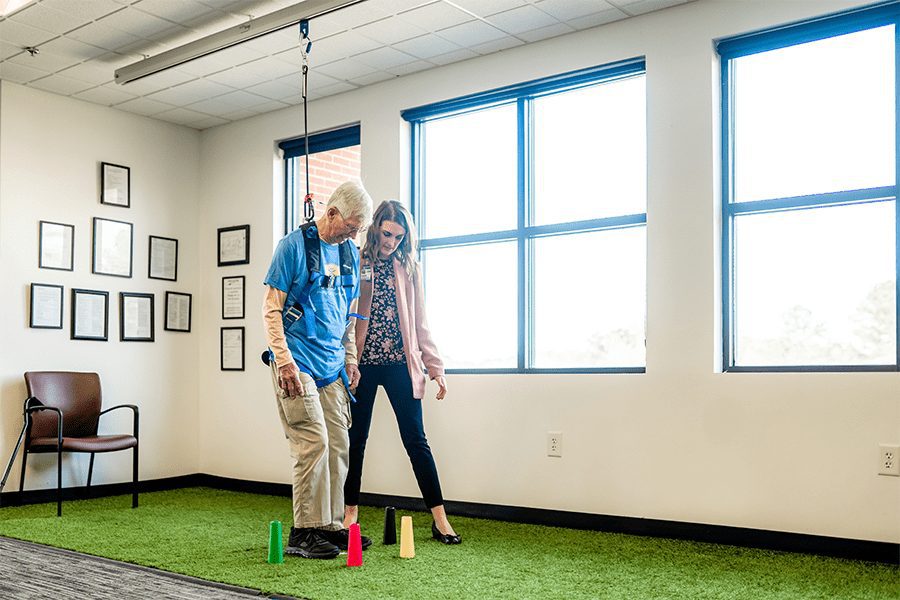
When comparing overhead track systems, rehabilitation leaders need a solution that delivers safety, flexibility, reliability, and long-term value. Solo-Step was designed specifically for rehabilitation environments and addresses the key factors that matter most when selecting a system.
- Proven patient safety performance with continuous fall protection that allows patients to safely participate in challenging gait, balance, and mobility activities.
- Easy for therapists to use, with intuitive harnessing and smooth trolley movement that integrates seamlessly into daily treatment sessions.
- Compatible with a variety of ceiling structures, making it a practical solution for both new construction projects and existing rehabilitation facilities.
- Flexible and customizable track layouts that can be tailored to your facility today while allowing for future expansion as your programs grow.
- Low-maintenance design that helps reduce operational burdens, minimize downtime, and lower long-term ownership costs.
- Comprehensive installation support, with the Solo-Step team assisting with planning, engineering coordination, project management, and installation logistics.
- Decades of rehabilitation expertise, providing facilities with a trusted partner that understands the unique challenges of patient mobility and fall prevention.
- Dedicated customer support before, during, and after installation to help maximize the value of your investment.
- Durable construction designed for long-term use in demanding healthcare environments.
- Supports a wide range of patient populations, including neurological, orthopedic, vestibular, and geriatric rehabilitation programs.
By combining patient safety, ease of use, installation flexibility, simple maintenance, and industry expertise, Solo-Step provides rehabilitation facilities with a dependable overhead track system that can support their clinical goals for years to come.
What are the Costs Associated with an Overhead Track System?
Initial Equipment Investment
The purchase price represents only one portion of the total investment. Facilities should consider features, capabilities, and long-term value rather than focusing solely on upfront costs.
Installation Expenses
Installation costs may include engineering services, labor, structural modifications, and project management. Understanding these costs early helps prevent budget surprises.
Maintenance Costs
Routine maintenance expenses vary between systems. Facilities should evaluate expected inspection requirements, replacement components, and service needs when comparing options.
Service Agreements
Service agreements can simplify maintenance planning and provide access to expert support. Comparing available service options helps facilities determine whether a contract aligns with their operational needs.
Replacement Components
All systems have components that require eventual replacement. Understanding expected replacement cycles provides a more accurate picture of long-term ownership costs.
Facility Modification Costs
Some systems require significant facility modifications, while others can be installed with minimal structural changes. These costs should be factored into the overall evaluation.
Future Expansion Expenses
A scalable system may reduce future expansion costs by allowing facilities to add track sections rather than replace the entire system. Expansion flexibility can significantly improve long-term value.
Operational Efficiencies
Overhead track systems can improve therapist efficiency, reduce staffing demands, and increase treatment opportunities. These operational benefits often contribute significantly to return on investment.
Why Solo-Step Delivers Long-Term Value
When evaluating the total cost of ownership, Solo-Step stands out as a simple, affordable, and effective solution for rehabilitation facilities. From initial planning and engineering to installation and long-term support, Solo-Step is designed to help facilities maximize their investment while minimizing complexity. Our turnkey installation process means the Solo-Step team manages every aspect of the project, including site evaluation, engineering coordination, project planning, and installation management, helping reduce the burden on facility staff and ensuring a smooth experience from start to finish.
With customizable track layouts, minimal maintenance requirements, durable components, and comprehensive customer support, facilities can confidently implement a fall protection solution that supports patient safety and clinical growth for years to come. Rather than focusing solely on upfront costs, rehabilitation leaders should consider the long-term operational efficiencies, reduced downtime, and enhanced therapy opportunities that Solo-Step provides.
If you’re looking for an overhead track system that combines safety, flexibility, ease of use, turnkey installation, and lasting value, Solo-Step is an investment that continues to deliver benefits long after installation. Contact our team today to discuss your facility’s needs and request a free quote to learn how Solo-Step can help create a safer, more efficient rehabilitation environment.