
Top Causes of Patient Falls During Rehab and How to Prevent Them
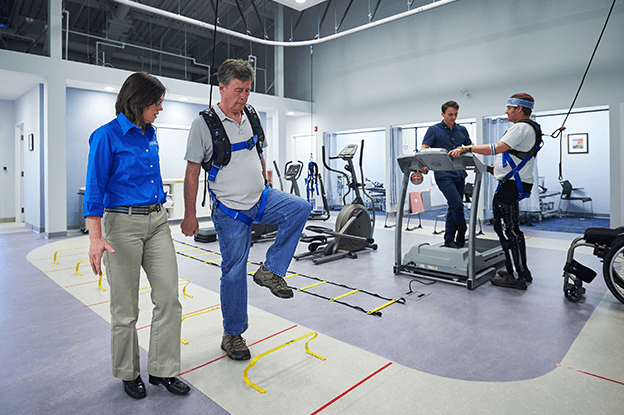
According to the Agency for Healthcare Research and Quality, between 700,000 and 1,000,000 people in the United States fall in the hospital, and about 1.3 million residents in nursing facilities fall each year. Falls can lead to significant impacts, such as:
- Serious injuries
- Decreased ability to function
- A reduced quality of life
- Increased fear of falling
- Increased use of health care
- And more
Falls can do more than interrupt rehabilitation. They can slow progress, reduce independence, and impact recovery outcomes. Rehab patients are often encouraged to challenge their balance, strength, and mobility as part of their recovery, which naturally increases their fall risk. While fall risk is a real concern in rehabilitation, it is essential to recognize that many falls are preventable when the underlying causes are understood and addressed.
Below, we break down the most common causes of patient falls during rehabilitation and practical ways facilities can reduce risk while still allowing patients to progress.
Cause 1: Impaired Balance, Strength, or Neurological Control
Many rehab patients are recovering from conditions that directly affect balance and movement. These conditions can lead to poor postural control and slower physical responses, which significantly increase fall risk. Key examples include:
- Stroke
- Parkinson’s disease
- Multiple sclerosis
- Amputations
- Post-operative weakness
Key Findings:
- Individuals with neurological conditions have a much higher fall risk compared with healthy adults.
- Up to 68% of people with Parkinson’s disease experience at least one fall per year, more than twice the rate seen in similarly aged adults without Parkinson’s
- Balance and strength impairments limit a patient’s ability to recover from minor missteps.
- Everyday movements such as standing from a chair, turning, or stepping over obstacles can become hazardous.
- In rehabilitation settings, where patients are encouraged to challenge their mobility, these deficits make falls more likely unless proper safety measures are in place.
Cause 2: Fear of Falling and Hesitation During Movement
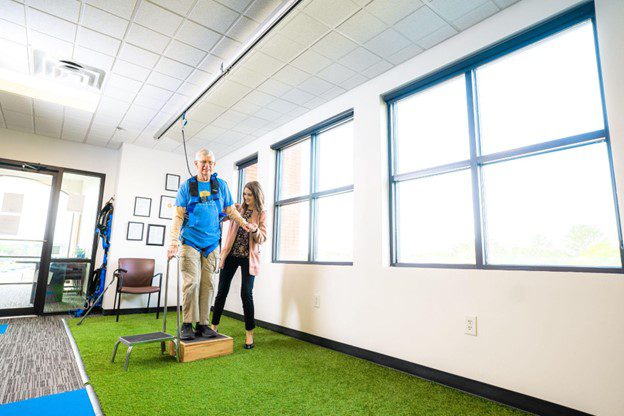
Fear of falling is a major contributor to patient falls because it directly affects how people move. Research shows that fear of falling is common, with nearly half of older adults reporting a significant fear of falling, regardless of whether they have previously fallen.
This fear can lead to hesitation during walking, transfers, or balance tasks, which disrupts natural gait patterns, slows reaction times, and reduces automatic balance responses. Over-guarding or excessive support can sometimes reinforce fear rather than build confidence.
Key Findings:
- Fear can occur even without a previous fall.
- Hesitation during movement increases instability and fall risk.
- Over-reliance on physical support may reduce confidence and independence.
- Fear-driven activity restriction can lead to muscle weakness and decreased functional ability, further increasing fall risk.
Cause 3: Therapist Spotting Limitations
Manual spotting is important in rehab, but it has limits. Therapists can only provide so much physical support, especially with larger patients or during more challenging balance and gait exercises. Fatigue from long days of hands-on care can also make it harder to react quickly if a patient loses balance.
Key Findings:
- Nearly 30 percent of rehab therapists report work-related injuries each year from patient handling
- Falls often occur during gait and balance training, the activities where therapists provide the most hands-on support
- Relying solely on manual spotting can put both patients and therapists at risk
- Fatigue or overexertion may reduce a therapist’s reaction time
- Patients may be less safe if a fall occurs without supplemental safety measures
Cause 4: Environmental and Space Constraints
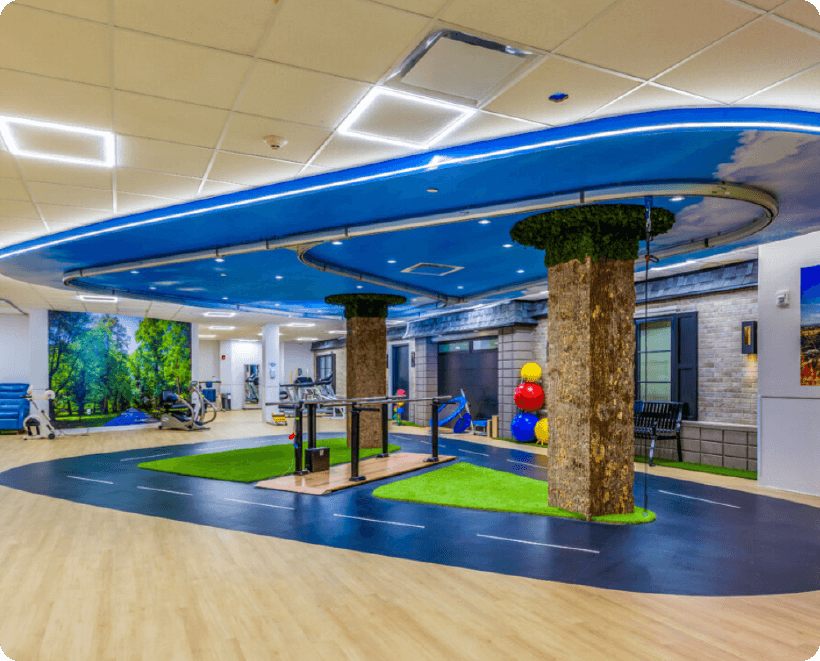
Rehab gyms and training areas can sometimes contribute to falls. Limited space, crowded areas, and fixed equipment can restrict movement and make it harder for patients to recover from a loss of balance.
Key Findings:
- Tight or cluttered spaces increase the risk of trips and missteps
- Fixed equipment or narrow pathways can limit safe movement patterns
- Environmental constraints make it harder for therapists to intervene quickly
- Properly designed spaces allow patients to practice functional movements safely
- Flexible layouts and adaptable safety systems can reduce fall risk without limiting therapy
Cause 5: Pushing Progress Without Adequate Safety Support
Challenging patients is essential for rehab, but increased intensity also increases fall risk if safety measures do not scale appropriately.
Key Findings:
- Advancing gait, balance, or speed without proper support can increase instability
- Falls are more likely when a patient’s abilities exceed available safety measures
- Providing safety systems that adapt to patient progression enables higher-intensity training safely
- Safe progression builds confidence, functional gains, and faster recovery
- Inadequate support can lead to preventable injuries for both patients and staff
How to Prevent Falls in Rehabilitation
Cause 1: Impaired Balance or Strength
- Provide balance and strength exercises in a safe, controlled setting.
- Use safety support systems, like Solo-Step, so patients can practice without fear of falling.
- Gradually increase difficulty as patients improve.
Cause 2: Fear of Falling
- Create a safe and supportive environment.
- Encourage natural movement and avoid over-restrictive guarding.
- Gradually challenge patients while keeping safety measures in place.
Cause 3: Therapist Spotting Limitations
- Use fall protection systems instead of relying only on manual spotting.
- Schedule breaks to reduce therapist fatigue.
- Let therapists focus on movement cues and technique rather than catching falls.
Cause 4: Environmental and Space Constraints
- Keep training areas clear and organized.
- Arrange equipment for safe, open movement paths.
- Use flexible layouts and adaptable safety systems. The Solo-Step Ceiling-Mounted Track System takes up minimal floor space in your facility.
Cause 5: Pushing Progress Without Enough Safety
- Match safety measures to the patient’s level of challenge.
- Increase speed, balance, or complexity gradually and safely.
- Provide support that lets patients train confidently without risk.
The Role of Fall Protection Systems
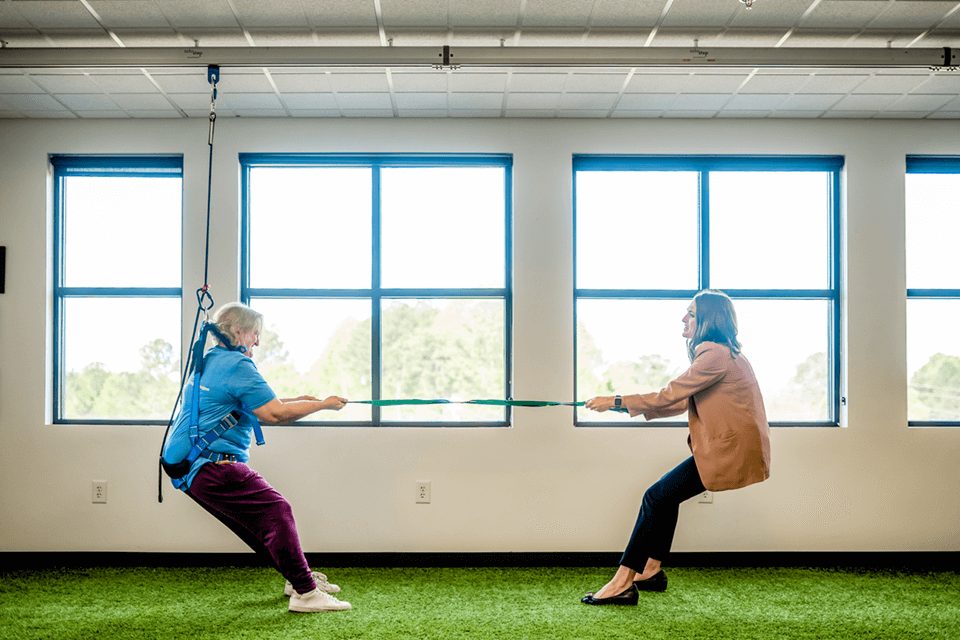
Fall protection systems, such as the Solo-Step Overhead Track & Harness System, play a crucial role in reducing falls during rehabilitation. They provide consistent support, allowing patients to move more confidently and therapists to focus on instruction rather than manually preventing falls.
Key Patient Benefits
- Increased confidence to practice movements
- Freedom to safely challenge balance and strength
- Faster progress without fear of falling
Key Therapist Benefits
- Reduced risk of injury from manual spotting
- Ability to focus on teaching and guiding movement
- Less physical strain during high-intensity sessions
Key Facility Benefits
- Fewer fall-related incidents
- Safer rehab environment overall
- Improved patient outcomes and satisfaction
By integrating fall protection systems, rehab facilities can address multiple fall risks at once, making therapy safer, more effective, and more empowering for everyone involved.
Key Takeaway: Falls Can Be Prevented
Falls in rehabilitation happen for many reasons, including balance issues, fear, therapist limits, space challenges, and lack of proper safety support. The good news is that most falls can be prevented with the right strategies.
By understanding these causes and taking steps to address them, facilities can:
- Keep patients safer
- Protect therapists from injury
- Build confidence for patients to move and progress
- Create a more effective and supportive rehab environment
Fall protection systems like the Solo-Step Overhead Track System provide consistent support so patients can practice safely, therapists can focus on instruction, and your clinic can reduce fall-related risks.